
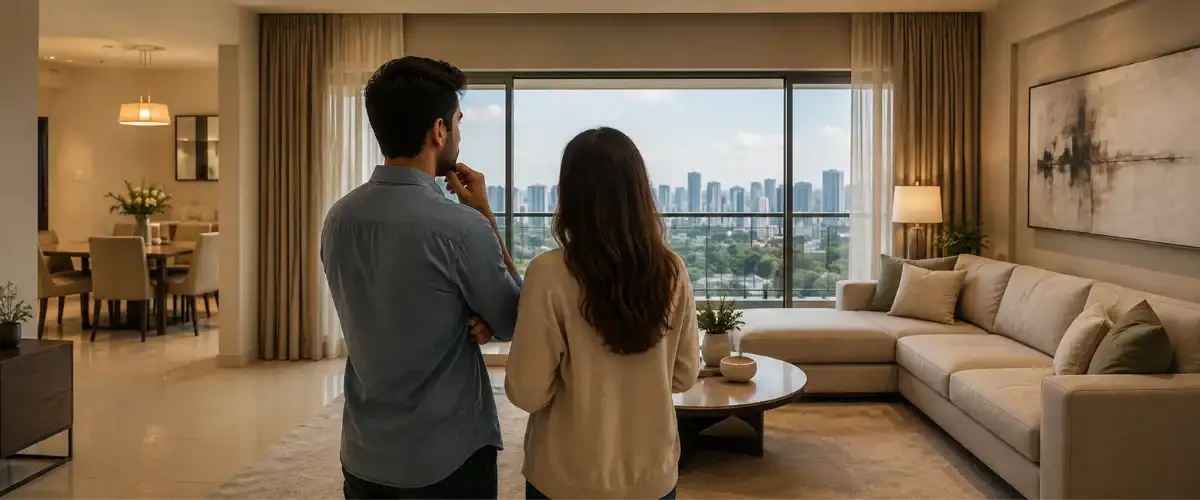
A home today is expected to do far more than provide four walls and a roof. For many families, it needs to support work, rest, fitness, social time, privacy and everyday convenience, all within the same residential environment. This shift is changing how people evaluate apartments and residential communities.
The idea can be seen in developments associated with Madhav Kalyan, where the broader conversation around contemporary housing goes beyond the apartment itself. Buyers are increasingly looking at the quality of the neighbourhood, access to daily essentials, community spaces, building planning and the experience a home can offer over the long term.
From an Apartment to a Complete Living Experience
Earlier, homebuyers often began their search with carpet area, configuration and price. These remain important, but the decision-making process has become more detailed.
A modern home is increasingly evaluated through questions such as:
- Is the layout practical for everyday family life?
- Does the apartment receive adequate natural light and ventilation?
- Is there useful space rather than simply more built-up area?
- Are essential lifestyle amenities available within the development?
- How convenient is the surrounding neighbourhood?
- Can the property continue to meet changing family requirements?
These questions reflect a wider movement towards lifestyle-oriented residential development.
For a buyer searching for a new apartment, this approach can be more useful than judging a property only by its headline price or number of amenities.
Why Efficient Home Design Matters
Modern urban homes need to make every square foot count. A well-planned apartment should allow residents to move comfortably between living, dining, kitchen and private areas without creating unnecessary dead space.
Features that can improve everyday usability include:
- Efficient room proportions
- Functional kitchen layouts
- Adequate storage opportunities
- Well-positioned windows
- Practical balconies
- Privacy between common and private areas
- Flexible spaces for work or study
This matters particularly to families whose needs may change over time. A room that works as a home office today could become a study area or children’s room later.
The focus is therefore moving from maximum area to meaningful usable space.
Location Still Shapes the Daily Experience
Even the best-designed apartment cannot compensate for an inconvenient location.
Homebuyers should consider the practical geography of a property rather than looking only at a pin on a map. The distance to railway stations, major roads, schools, healthcare facilities, supermarkets, employment hubs and recreation areas can influence everyday life significantly.
For buyers evaluating Madhav Khadakpada, for example, the surrounding residential ecosystem can be considered alongside the apartment itself. This creates a more realistic picture of what living in a particular development could feel like.
A useful location assessment should consider both present accessibility and future convenience. Roads and public transport may improve, while new retail, educational and social infrastructure can gradually strengthen an established residential catchment.
Amenities Should Solve Real Problems
A long amenities list may look impressive, but buyers should ask a simpler question: Will these facilities actually improve everyday life?
Useful residential amenities can support different aspects of modern living, including:
Wellness: Fitness areas, walking spaces and activity zones can make healthy routines more convenient.
Recreation: Multipurpose areas, children’s play zones and leisure spaces provide opportunities to unwind without travelling far.
Community: Shared spaces can encourage interaction between residents and create a stronger neighbourhood environment.
Convenience: Practical facilities can reduce the need to leave the premises for small everyday activities.
The value of amenities therefore depends on quality, usability and maintenance, not merely quantity.
A Home Needs to Work for Different Stages of Life
One of the biggest changes in residential preferences is the desire for flexibility.
A young professional may need a quiet work corner. A couple may prioritise efficient storage and recreation. Families with children may look for safe play areas and accessible schools. Older residents may value lifts, walking areas and convenient healthcare access.
This makes future-ready housing increasingly relevant.
Instead of asking only whether a property suits today’s lifestyle, buyers can consider whether its planning, surroundings and community features can continue to work as their circumstances evolve.
What Buyers Should Check Before Shortlisting a Home
A modern-looking project can still have practical limitations. Before making a decision, prospective buyers should review:
- Carpet area: Understand the actual usable space rather than relying only on saleable area.
- Layout: Check whether rooms and circulation areas are genuinely functional.
- Natural light and ventilation: Visit the property at different times when possible.
- Connectivity: Assess actual travel routes instead of relying solely on stated distances.
- Infrastructure: Look at nearby schools, healthcare, shopping and transport options.
- Maintenance: Understand how common facilities are expected to be maintained.
- Regulatory information: Verify project registration and available documents through the relevant authority.
MahaRERA provides registered-project information and consumer-oriented guidance, making it an important reference point during property research. Its official guidance also highlights the importance of regulatory compliance and project registration for eligible developments.
Why the Neighbourhood and Home Should Be Viewed Together
A residential property is not an isolated purchase. The surrounding neighbourhood influences commuting, education, healthcare access, recreation and long-term convenience.
That is why a project such as Madhav Godrej Hills should not be considered only through its apartment specifications. Buyers can also assess the wider residential environment, everyday accessibility and how the development fits into their lifestyle requirements.
The same principle applies when researching Madhav Kalyan or comparing options around Madhav Khadakpada. A balanced evaluation looks at the home, the community and the location together.
The Future of Urban Homebuying
The modern homebuyer is becoming more informed and more selective. Price remains a key consideration, but it is increasingly weighed against usability, connectivity, lifestyle, community planning and long-term suitability.
This is creating demand for residential developments that feel practical rather than simply impressive on paper.
For buyers, the smartest approach is to look beyond brochures and ask how the property will function on an ordinary weekday, a busy family weekend and several years from now.
Explore Your Next Residential Opportunity
If you are researching modern homes and residential developments around Kalyan, explore the available details, project information and location advantages before taking the next step.
Visit www.madhavkalyan.com or speak with the property team at +91 7397994881 for project information and assistance in understanding your residential options.
A good home is not simply where you live. It is the environment that supports how you want to live.